

When clinic owners want better imaging, they usually start looking at entirely new ultrasound consoles. But here is a reality check from the equipment supply side: replacing the entire machine is often a massive waste of money.
The transducer is what actually creates the image. It determines your resolution, penetration depth, and procedural accuracy. If you are dealing with degraded image quality or looking to expand your practice’s services, you likely just need the right probe.
This guide strips away the textbook physics and gives you exactly what you need to make a smart, cost-effective purchasing decision for your clinic.
1. Match the Probe to Your Patient Population
Not all probes are built the same, and forcing a general-purpose probe to do specialty work limits your diagnostic confidence. Before you browse replacement ultrasound probes, use this quick breakdown to identify exactly what your specialty requires:
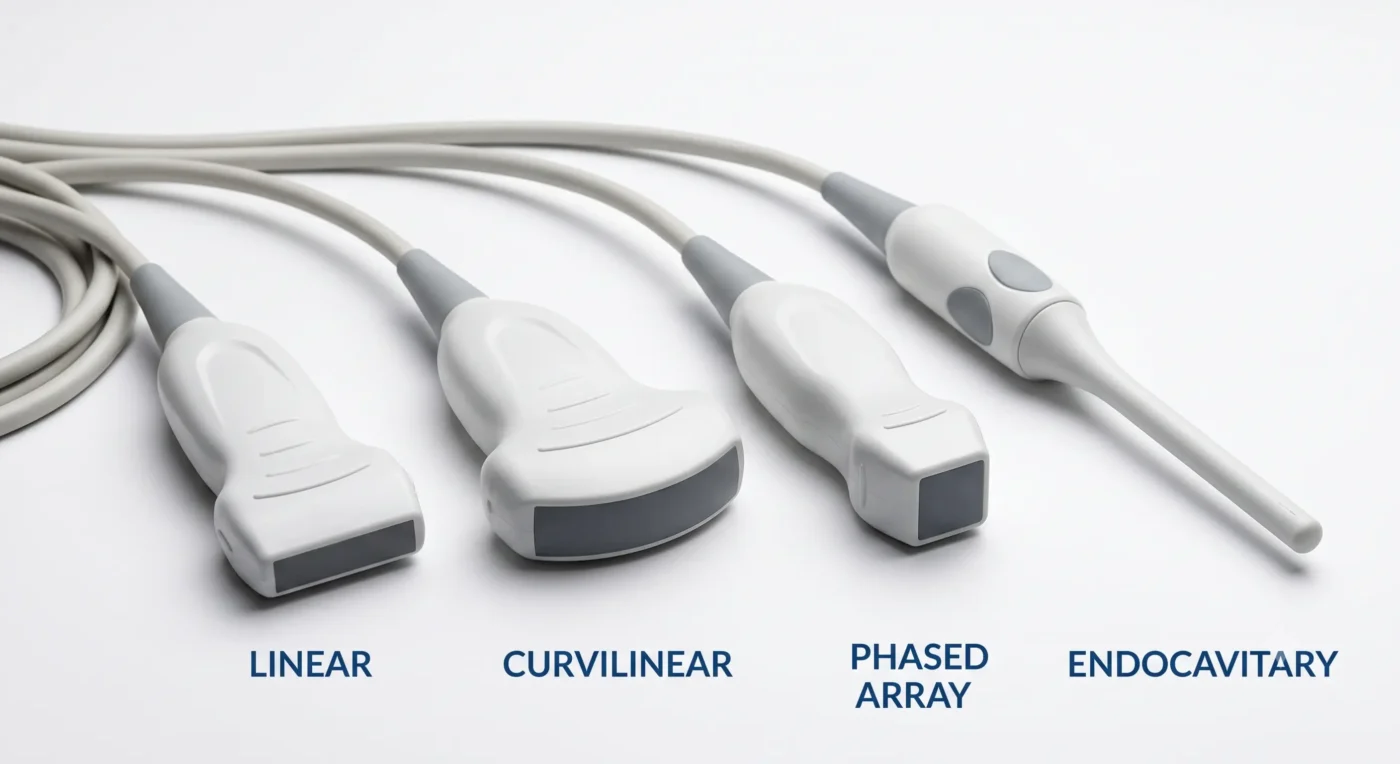
| Probe Type | Frequency Range | Best Clinical Fit | Why You Need It |
| Linear | High (7–18 MHz) | MSK, Vascular, Pain Management | Unmatched superficial detail and pinpoint needle visualization. |
| Curvilinear (Convex) | Low (2–5 MHz) | OB/GYN, Abdominal, General | Deep tissue penetration with a wide field of view. |
| Phased Array | Mid (1–5 MHz) | Cardiology, Echocardiography | Small footprint to fit between ribs; excellent Doppler sensitivity. |
| Endocavitary | Mid-High (5–9 MHz) | Urology, Transvaginal | High-resolution internal imaging. |
Quick Tip: If you run a procedural practice like sports medicine, a high-frequency linear probe is your best friend. For general practitioners, a standard curvilinear probe will act as your daily workhorse.
2. Stop Overpaying: The Refurbished Advantage
Transducers are the most frequently replaced components in any clinical setup. Cables get rolled over by carts, connectors get bent, and crystals naturally wear out over time.
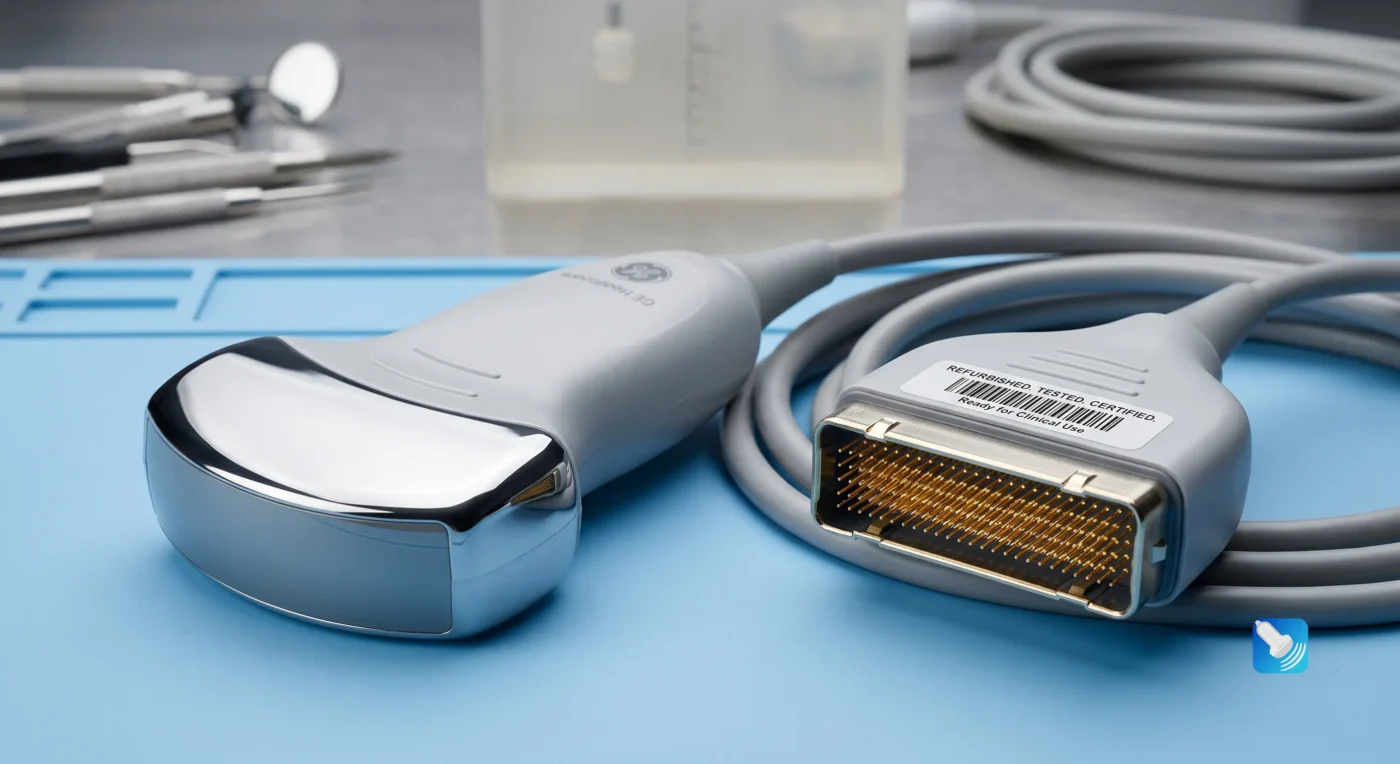
When it’s time to replace one, you have two options:
- Buying New: You get the manufacturer’s warranty, but you also pay a massive premium (often full MSRP) and deal with frustrating lead times.
- Buying Refurbished: For most private practices, this is where the smart money goes.
A high-quality refurbished ultrasound machine or probe performs exactly like a new one, but at 40% to 60% of the cost. However, you have to be careful who you buy from. At The Ultrasound Source, we don’t just clean them up; every refurbished probe undergoes strict phantom-testing for dead crystals, image dropout, and electrical safety before it ever reaches your clinic.

3. Don’t Guess on Compatibility
There is nothing more frustrating than unboxing a new probe only to find it doesn’t fit your machine. Before requesting a quote, verify these three details on your current system:
- Please locate and identify your exact model of ultrasound machine. Philips systems for example will have the same model number for the transducer, but they have different connectors depending on which system you have.
- Software Version: Some older transducers will not communicate with newer software updates.
- Connector Type: Check the plug. Does it use physical pins, or is it a pinless interface? (If you aren’t sure, snap a photo and send it to our team).
4. Repair vs. Replace: Don’t Throw it Away Just Yet
You don’t always have to buy a replacement. If your current probe is acting up but the internal crystals are fine, you might save thousands by sending it to our dedicated ultrasound repair lab.
Here is how we usually advise our clients:
- Minor Cable Tears or Bent Pins: Repair it. Cosmetic damage and strain relief issues are easily fixable.
- Bubbling Acoustic Lens: Repair it. The soft lens that touches the patient can usually be safely replaced.
- Black Lines in the Image: Replace it. This indicates dead crystals inside the probe head, which cannot be repaired.
- Fluid Intrusion: Replace it. Internal liquid causes corrosion, compromising both image quality and patient safety.
If your diagnostic clarity is compromised by permanent artifacts, replacing the probe is the only safe clinical option.

Ready to Upgrade Your Clinic’s Imaging?
The right transducer speeds up your workflow, increases your diagnostic confidence, and ultimately improves patient care. And you shouldn’t have to navigate OEM bureaucracy or pay hyper-inflated prices to get it.
Whether you are looking for a tested refurbished replacement from top brands like GE Healthcare and Philips, or you need a fast repair quote, we have the inventory to help.
Have your machine model ready and reach out to our team today.